
Leipzig
Bioengineering
Group
Engineering biomaterial platforms to model disease, direct cell behavior, and drive regeneration.
We create cutting-edge biomaterial and tissue engineering solutions — integrating stem cell niche engineering, organoid and 3D disease modeling, and hydrogel biomaterials science — to advance regenerative medicine and address complex diseases of the CNS, liver, and chronic wounds.
Research Focus Areas
Our interdisciplinary approach combines biomaterials science, cell biology, and bioengineering principles to develop next-generation therapeutics.
Engineering the Stem Cell Niche
Investigating microenvironmental cues that modulate stem cell function — using biomaterial scaffolds with covalently immobilized growth factors, guidance molecules, and fluorocarbons to direct adult stem cell proliferation, adhesion, migration, and differentiation.
Organoids & 3D Disease Modeling
Building patient-derived organoid and 3D tissue models that recapitulate disease microenvironments — enabling mechanistic studies and therapeutic screening in physiologically relevant, human-tissue-mimetic platforms.
CNS Injury, Repair & Regeneration
Sequestering growth factors to unique biomimetic biomaterial scaffolds to promote CNS repair — combining localized protein signaling with stem cell delivery or recruitment for spinal cord injury and syringomyelia treatment.
Wound Healing
Engineering biocompatible photocrosslinkable chitosan hydrogels covalently modified with perfluorocarbons to provide sustained oxygenation for chronic diabetic wounds — creating oxygen-rich, moist healing environments with antimicrobial properties.
Recent News
All News →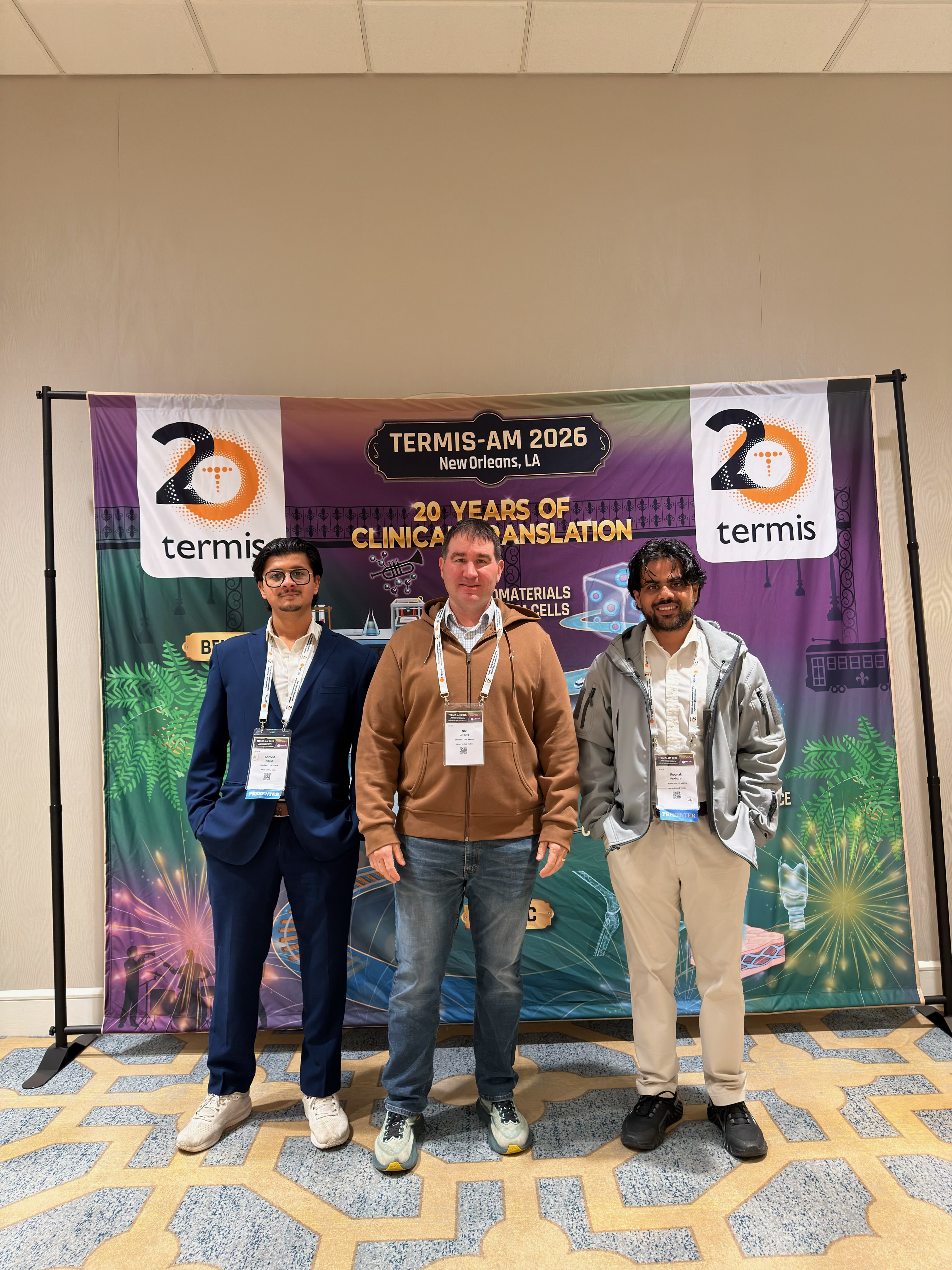
Leipzig Lab at TERMIS 2026 in New Orleans
Dr. Leipzig, Rounak Pokharel, and Ahmed Usaid attended TERMIS in New Orleans. Rounak and Ahmed both gave talks presenting their latest research.
Read more →
Dr. Leipzig Named 2026 Recipient of the Louis A. Hill Award
Dr. Leipzig received the College of Engineering and Polymer Science's highest faculty recognition for outstanding achievement across research, teaching, and service.
Read more →Welcome, Fabliha Noshin!
Fabliha Noshin joins the Leipzig Bioengineering Group as a Ph.D. student in Chemical, Biomolecular, and Corrosion Engineering. Welcome, Fabliha!
Read more →Our Mission
Our research is geared towards enabling new approaches for tissue engineering and regenerative therapies. We engineer microenvironmental cues that actively shape cell behavior — covalently immobilizing growth factors, cytokines, and fluorocarbons within 3D hydrogel platforms to instruct cells with sustained, spatially defined signals. Our research programs span organoid and 3D disease modeling for liver and CNS barrier research, biomaterial scaffold strategies for spinal cord injury repair and regeneration, and oxygenating hydrogel dressings for chronic wound healing.